
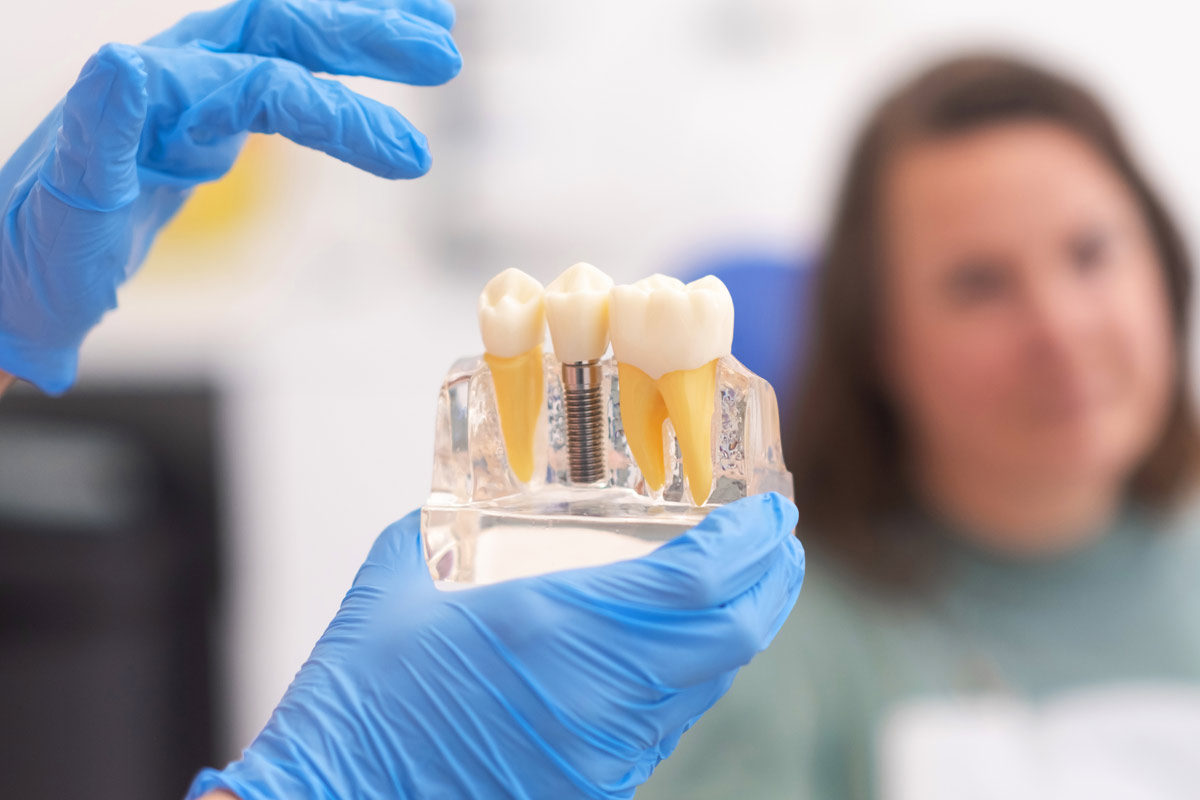
If you’re thinking about dental implants, you likely know the basics. A titanium post is put in the jaw. A crown goes on top. What many patients don’t hear is that traditional screw-retained implants can have issues. Screws can loosen or break. They leave a small access hole in the crown, which can affect the look, especially in the front teeth. Screwless dental implants offer a different option.
At Central Valley Dentistry, we want you to understand all your options. Keep reading to learn how screwless implants work, who they’re best for, the cost, and how they compare to traditional systems.
Table of Contents
ToggleThe Screwless Implant System
Screwless implants, or non-screw dental implants, avoid common problems like screw loosening or breakage. Instead of a screw, the crown is bonded to the implant with dental cement.
The materials stay the same. The post is usually titanium. The crown is often zirconia or porcelain. Titanium fuses to the bone through osseointegration, giving the implant long-term stability. The Screwless dental implants procedure in Phoenix is the same as for screw-retained implants.
The main difference is how the crown is attached. Traditional implants use a screw that goes through the crown. Screwless systems use a precision-fit abutment and dental cement. There is no hole in the biting surface, so the crown looks more natural.
Cement-retained crowns can also handle bite pressure well. This helps patients who grind their teeth or have strong chewing forces. They are especially useful for front teeth, where appearance matters most.
The surgical process does not change. The titanium post is placed the same way. The only difference is how the final crown is secured after healing.
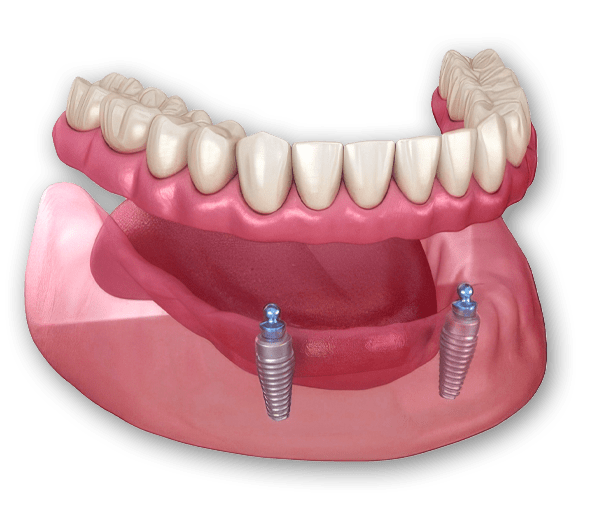
$12,900! $6,900!
- Complete Oral Evaluation
- Cone-Beam CT Scan
- 2 Implants per arch
- Implant Retained Overdenture
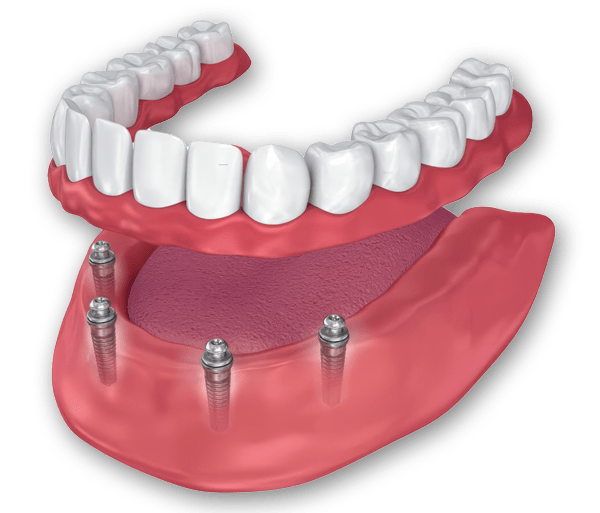
$17,900! $11,900!
- IV Sedation
- All extraction
- 4 Implants per arch
- Bone Graft
- Same Day Teeth
Get Your Complementary Dental Implant Exam
(Valued at $495)
How Do Screwless Dental Implants Work? Step by Step
As briefly mentioned, the screwless dental implant procedure closely mirrors the traditional implant procedure. The major differences appear in how the abutment is handled and how the crown is attached at the end. Let’s look at the steps one by one:
Step 1. Consultation and Imaging
Your dentist takes 3D CBCT scans and reviews your bone density, gum health, and bite. Unlike screw-retained cases, your dentist also evaluates the ideal abutment height and margin placement since cement-retained crowns require more precise subgingival positioning to manage cement cleanup.
Step 2. Implant Post Placement
A titanium post is surgically inserted and placed into the jawbone. This step is identical to the traditional implant procedure. You will receive local anesthesia, and most patients report minimal discomfort during the procedure.
Step 3. Osseointegration
Over a period of 3 to 6 months, the bone grows around the titanium post and fuses with it. This healing phase is the same for both screwless and screw-retained implants. You cannot rush this stage, as it is what gives the implant its permanent stability.
Step 4. Abutment Placement
Once the post has fully integrated, your Phoenix implant dentist attaches an abutment to the top of it. In a screwless system, the abutment is often positioned slightly below the gum line to allow for a natural crown margin and to make cement cleanup easier. This is one of the most important differences between the two systems, and it requires careful technique.
Step 5. Crown Fabrication
Impressions and scans or digital scans of your mouth are sent to a dental lab, where a custom crown is made. For screwless implants, the crown is designed without a screw access channel, so the entire biting surface remains intact and uninterrupted.
Step 6. Crown Placement and Cementation
When the crown is ready, your dentist bonds it to the abutment using a strong dental cement. Unlike screw-retained crowns, which are tightened with a torque wrench and sealed with composite, there is no drilling, no access hole, and no metal visible on the top of the tooth. Your dentist removes any excess cement carefully, as leftover cement can irritate the surrounding gum tissue if not cleaned up thoroughly.
Step 7. Final Check and Follow-Up
Your bite is checked and adjusted if needed. Your expert dentist will schedule follow-up visits to monitor gum health and confirm the cement bond remains stable over time.
Benefits of Screwless Dental Implants
- There is no visible screw hole on the crown.
- Front teeth look more natural without patches.
- You do not have to worry about loose screws.
- There is no chance of a screw breaking.
- Your bite pressure spreads evenly across the crown.
- The lab does not need to add a screw hole.
- The final visit is usually quicker and simple.
- It feels more stable for teeth grinders.
- It works well when implant angles are tricky.
- The process is similar to restoring natural teeth.
Screwless vs. Screw-Retained Implants: Which Is Better?
| Feature | Screwless (Cement-Retained) | Screw-Retained |
| How the crown is attached | Bonded with dental cement over the abutment | Secured with a titanium screw through the crown |
| Visible screw hole | No | Yes, sealed with composite filling |
| Appearance for front teeth | Excellent, fully natural surface | Good, but composite patch may show over time |
| Risk of screw loosening | None | Possible, especially with heavy bite forces or grinding |
| Risk of screw fracture | None | Possible, especially over many years |
| Crown retrievability | Difficult, crown must be cut off for repair | Easy, screw is removed and crown lifts off |
| Risk of cement residue | Possible if not cleaned properly | None |
| Best tooth location | Front teeth and visible areas | Back teeth with heavy chewing load |
| Ideal for angled implants | Yes, no screw access alignment needed | More difficult with off-axis implants |
| Maintenance access | Limited once bonded | Full access after removing screw |
| Overall complication rate | 3–5%, similar to screw-retained | 3–5%, similar to cement-retained |
| Clinical survival rate | No significant difference (MDPI 2024) | No significant difference |
The right choice depends on where the implant is placed, how your bite is aligned, how important aesthetics are to you, and how your dentist prefers to work. A good implant dentist will recommend the option best suited to your specific anatomy and goals.
Ideal Candidates for Screwless Dental Implants
Screwless dental implants are not for everyone. They are often a good choice for patients in the following situations:
- When replacing a front tooth and want it to look natural.
- When the implant angle makes screw access hard.
- When the patient grinds or clenches their teeth.
- For patients with healthy gums and good bone support.
- For patients who are comfortable with a crown that stays cemented.
- For patients who want a smooth crown surface.
- For patients who had loose screws before.
Screwless Dental Implants Cost in Phoenix
Screwless dental implants are not priced separately from standard implants in most Phoenix dental offices. The cost difference, if any, comes from the type of crown and abutment used, not from the cement versus screw method itself.
Here are the most current price ranges:
| Treatment | Estimated Cost in Phoenix (2025–2026) |
| Single dental implant post only | $1,500 – $2,000 |
| Abutment | $300 – $600 |
| Cement-retained crown (porcelain or zirconia) | $1,000 – $2,500 |
| Full single-tooth implant (post + abutment + crown) | $3,000 – $6,000 |
| Bone graft (if needed) | $300 – $3,000 |
| CT scan / 3D imaging | $200 – $400 |
| Full arch implant restoration (All-on-4) | $18,000 – $35,000 per arch |
Dental insurance does not usually distinguish between screw-retained and cement-retained implants. Coverage depends on your specific plan. Most policies list implants as a major procedure and cover about 10% to 50% after your deductible. Some PPO plans may cover up to 50% to 60%. However, many plans have annual maximums between $1,000 and $2,500. Since a single implant in Phoenix often costs $3,000 to $6,000, insurance may only cover part of the total fee. Some carriers, including certain Delta Dental plans, provide partial coverage when the implant is considered medically necessary, while others still exclude implants as cosmetic.
If your plan does not include implant coverage, you can often use HSA or FSA funds to pay with pre-tax dollars. Many dental offices also offer in-house financing or accept third-party lenders such as CareCredit. Before starting treatment, ask for a pre-treatment estimate. This helps you understand exactly what your insurance will cover and what your out-of-pocket cost will be.
Possible Disadvantages
- Leftover cement under the gums can cause irritation or infection if not fully cleaned.
- Removing the crown later is difficult and often requires cutting it off.
- If the abutment screw loosens, the crown usually must be destroyed to fix it.
- May not be ideal for back molars with heavy chewing forces.
- Rare sensitivity to dental cement can occur.
- The technique requires strong clinical skill and careful cement removal.
- Not all dental offices offer cement-retained implants.
Tips for Caring for Screwless Dental Implants
Once your screwless implant is fully set, care is simple. Treat it like a natural tooth. Keep the crown and gums clean to prevent bacteria buildup.
- Brush twice a day with a soft toothbrush. Focus on the gum line around the crown.
- Floss daily. Regular floss works, or use a floss threader for easier access.
- Use a water flosser on low or medium to clean around the gums.
- Visit your dentist every six months for exams and X-rays.
- Avoid chewing ice, hard candy, or very hard foods on the implant.
- Wear a custom night guard if you grind your teeth.
- Do not try to remove or loosen the crown yourself.
- Call your Phoenix dentist if you notice movement, swelling, pain, or a bad taste.
Let Us Fix You Up With the Right Dental Implants in Phoenix
At Central Valley Dentistry, we take the guesswork out of the process. Schedule your FREE dental implant consultation with Dr. Behbahani.
During your visit, we will examine your mouth, take detailed 3D CBCT scans, and review your bite. You’ll receive a clear treatment plan, honest pricing, and straightforward answers. If you qualify for same-day options, including All-on-4 implants, we’ll explain how that works. If your case is more advanced, we will outline your timeline, total cost, and each step of treatment.
Trusted in the community with a 4.9-star Google rating, we accept most major insurance plans and offer flexible financing through CareCredit to make care more affordable.
Visit us at 6232 North 7th St., Phoenix, AZ, or call (602) 246-0385, and take the first step toward a stable, natural-looking smile. Schedule your free consultation today.
FAQs
Are screwless dental implants for seniors worth it?
Yes, in most cases. If you have good bones and controlled health conditions, they are a strong long-term option. Your dentist will confirm with an exam and imaging.
How do screwless dental implants stay in place?
The titanium post fuses to the bone over three to six months. The crown is bonded to the abutment with strong dental cement.
Are screwless dental implants permanent?
The implant post can last a lifetime. The crown may need replacement after 10 to 20 years due to normal wear.
Are screwless dental implants cheaper?
No. They usually cost about the same as screw-retained implants. In Phoenix, a single implant typically ranges from $3,000 to $6,000.
How does the cementless technique work?
“Screwless” usually means the crown is cemented, not screwed in. It still uses dental cement. True press-fit implant posts are different and less common.
Are zirconia screwless implants a good option?
Yes, for many patients. Zirconia crowns look very natural. Titanium posts remain the most studied and widely used option.
How much are screwless dental implants?
In Phoenix, a full single-tooth implant usually costs $3,000 to $6,000. Bone grafting can add $300 to $3,000. Insurance may cover 10% to 50%, depending on your plan.