
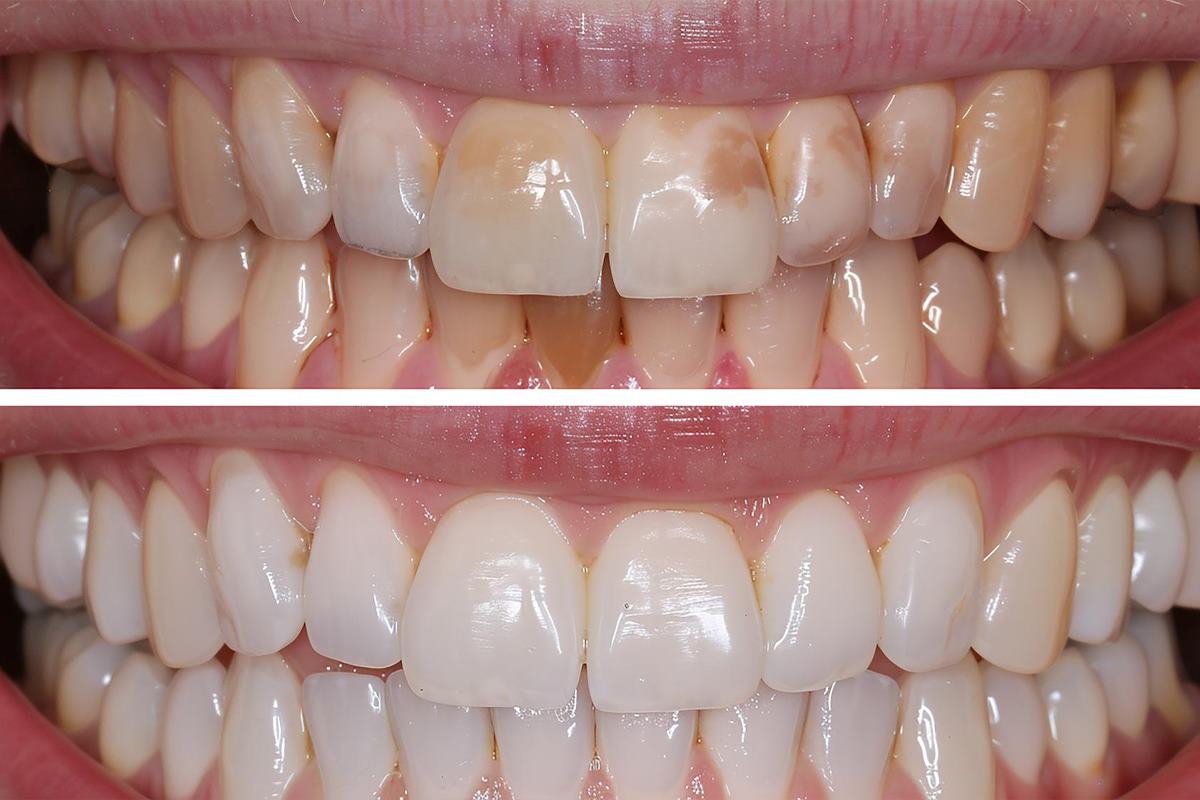
Sometimes teeth lose their natural color. They may turn yellow, brown, gray, or look spotted. This can happen slowly over many years or appear suddenly. Many people deal with this problem at some point in life. It often changes how they feel about their smile. In this article, you will learn everything about tooth discoloration.
Table of Contents
ToggleWhat Is Tooth Discoloration?
Tooth discoloration means a tooth has changed from its natural color. This change can appear on the surface or deep inside the tooth. The outer part, called enamel, can collect stains from food, drinks, or tobacco. The inner part, called dentin, may change color because of injuries, medicine, or health conditions. Dentists look at the type of tooth discoloration before choosing a treatment. Surface stains often clean easily, but deeper stains need special care.
Different Color Meanings
The color of tooth discoloration helps show what may have caused the problem. Here’s what each color means:
- Yellow or brown stains often come from drinks like coffee or tea and from smoking.
- Gray or blue shades may appear after a tooth injury or from taking certain medicines.
- White or chalky spots usually form when a person has too much fluoride while teeth are still growing.
- Green, black, or orange colors can sometimes happen because of bacteria or poor brushing habits.
Types Of Tooth Discoloration
Dentists in Phoenix group tooth discoloration into two main types. Each type starts in a different part of the tooth and needs different care.
- Extrinsic discoloration affects the outside of the tooth. It often happens from coffee, tea, tobacco, or not brushing well. This kind of stain usually gets better with cleaning or whitening.
- Intrinsic discoloration starts inside the tooth. It may happen because of an injury, too much fluoride, certain medicines, or infection. These stains are harder to remove and often need special dental treatments.
What Are The Most Common Causes Of Discolored Teeth?
Tooth discoloration can happen for many reasons. Some causes are part of daily habits, while others come from health or age. Here are the main causes of tooth discoloration:
- Drinking coffee, tea, or soda
- Smoking or chewing tobacco
- Not brushing and flossing well
- Taking certain medicines
- Using mouth rinses with strong chemicals
- Getting too much fluoride
- Getting hit in the mouth or injuring a tooth
- Aging and enamel wearing down
- Bacteria buildup in the mouth
- Eating foods with strong colors or spices
How Do Dentists Treat Discolored Teeth?
Best dentist Phoenix AZ treats tooth discoloration in different ways based on what caused the stain and where it is. Some treatments work for stains on the outside, while others help with stains deep inside the tooth. Here are the common treatments:
- For surface stains, dentists do a deep cleaning to remove buildup.
- They may use whitening products to make the enamel look brighter.
- Some patients get custom trays to whiten their teeth at home.
- For deep stains, dentists may use bleach that works from inside the tooth.
- If the stain does not go away, they may cover the tooth with a veneer, crown, or bonding.
Let’s Recap
Tooth discoloration affects people of all ages and can come from many causes. Some cases happen slowly over time while others happen suddenly. Surface stains often improve with cleaning and whitening, but deep stains may require advanced treatment. Regular dental visits help prevent and manage tooth discoloration. At Central Valley Dentistry, patients receive modern solutions that restore bright and healthy smiles.
FAQs
How to Fix Discolored Teeth At Home?
Use whitening toothpaste and drink dark liquids with a straw. Brush twice a day and floss daily. Over-the-counter whitening kits help with mild surface stains.
Can I Prevent Tooth Discoloration?
Yes, try to avoid dark drinks like coffee and tea, quit smoking, brush after meals and floss every day, visit the dentist every six months, drink water during the day to keep teeth clean.
How To Fix One Discolored Tooth?
A dentist can whiten a single tooth with special bleaching treatments. If that fails, they may use bonding or a veneer to match the color of the other teeth.
Why Are My Teeth Yellow When I Brush Them Everyday?
Brushing removes food and plaque but cannot always remove deep stains. Enamel may wear down over time and show the yellow dentin beneath. Diet and habits also affect tooth color.